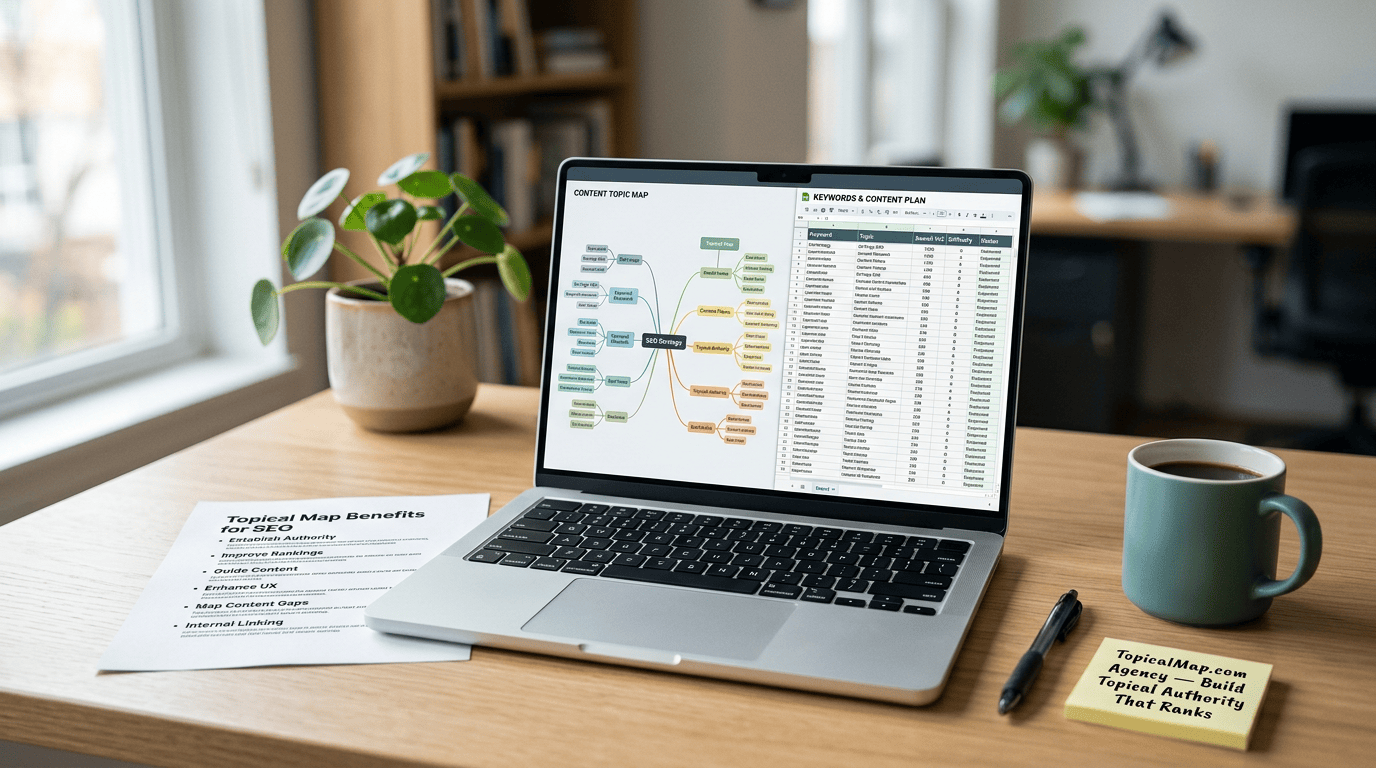
Topical maps for SEO show how a site should cover a subject, and the ten benefits are practical, not theoretical. Most teams know they need stronger topical authority, yet keyword lists and scattered briefs still leave gaps, overlap, and weak internal links. A topical map is a structured content blueprint that groups pages by theme, intent, and related entities, so the plan points to rankings, crawl paths, and cleaner content decisions.
The article breaks down how pillar and cluster structures build authority, how semantic relevance and long-tail coverage expand reach, and why crawlability and indexation improve when pages sit in a clear hierarchy. It also covers keyword cannibalization, content gap analysis, and the audit steps that turn scattered URLs into a usable roadmap. For teams building or reorganizing a library, that means fewer blind spots and a sharper publishing plan.
SEO managers, content strategists, agency principals, and in-house content teams get the most value here because they need a plan they can explain to writers and defend to stakeholders. A dry dog food cluster that covers only half its possible pages is a simple example of how the map exposes missed subtopics before launch. The sections that follow show how those benefits translate into cleaner architecture, stronger internal links, and more dependable organic performance.
Topical Maps for SEO Key Takeaways
- Topical maps organize content by theme, intent, and related entities.
- They build topical authority faster than isolated articles.
- They improve semantic relevance and long-tail keyword coverage.
- They clarify internal linking across pillar and cluster pages.
- They reduce keyword cannibalization by assigning one page per intent.
- They expose content gaps and make audits more accurate.
- They make SEO planning scalable and easier to defend.
What Is a Topical Map for SEO?
A topical map is a structured content blueprint for search engine optimization (SEO) and generative engine optimization (GEO). It organizes your site around core topics, subtopics, search intent, and related entities so each page fits a clear theme. A Topical Map is usually built in a spreadsheet or mind map, and the topical map SEO overview guide shows how that structure supports a broader strategy.
You can use topical maps to see thematic relationships, choose what to publish, and spot gaps before they turn into thin coverage. It is more than a keyword list because it groups terms into semantic clusters and builds coverage around meaning, not just volume. The payoff comes from a cleaner plan:
- Broad pillar topics sit at the top.
- Narrower support pages fill out the content clusters.
- Writers know how each page connects to the next.
- Search engines can crawl and index the content more easily.
That structure helps new sites plan before they publish, and it helps established sites reorganize scattered pages into cleaner topical silos. The result is a library that feels complete, connected, and credible.
1. Builds Topical Authority Faster

Topical maps help you show search engines that your coverage is broad, deep, and organized around one clear subject. A strong Topical Map connects broad themes, subtopics, and related entities, so your topical authority grows faster than a pile of isolated articles ever could.
The hierarchy does the heavy lifting:
- Organize main topics, subtopics, and keyword clusters in a spreadsheet and mind map so the site looks complete and easy to crawl.
- Build structure up to four levels deep so category pages can lead into intent-specific content without drifting from the core topic.
- Link each new page back into the cluster so SEO systems read stronger thematic relationships over time.
That structure can beat competitors with more backlinks or higher Domain Authority when your niche coverage is cleaner. You also make indexation easier for users and crawlers. When your site reads like a trusted authority on one subject, you often win because you answer more of the query space.
2. Improves Semantic Search Relevance
A topical map improves semantic search relevance by showing search engines how your pages connect. Instead of treating each page as a separate target, you group them by themes, subtopics, and related entities. That gives semantic SEO the context it needs, because modern search depends on intent and natural language signals, not just keyword matching.
The structure also mirrors how people learn and remember information. When a core topic, its related concepts, and the terms people naturally use all appear together, the page set feels complete and easier to trust.
The practical payoff shows up in three ways:
- Synonyms and supporting terms reinforce meaning without stuffing copy.
- Broad topics, subtopics, and support pages create a clear hierarchy that helps crawl paths and intent matching.
- Long-tail keywords fit naturally into the map, so close variations can surface the right page.
That makes the site easier to categorize and easier to navigate. It also strengthens internal linking and gives each page a better chance to appear for related searches.
3. Expands Long-Tail Keyword Coverage
A topical map helps you capture long-tail traffic by giving each query a clear home in the pillar and cluster model. Your pillar content covers the broad head term. Your cluster content targets narrower, lower-competition searches that the main page is unlikely to own alone.
The payoff shows up in a few ways:
- Broader query capture: related variants, subtopics, and niche terms your competitors often miss
- Traffic compounding: small pages can build a steadier organic base than one crowded keyword
- Cleaner topical depth: one silo at a time signals focus to search engines
- Stronger semantic coverage: related entities and natural language fit each page without forcing every variation into one article
Strong internal linking then moves link equity across the cluster. For deep niches, that structure turns scattered ideas into a wider search footprint and stronger topical authority in the SERPs.
4. Strengthens Internal Linking

A topical map turns internal linking from guesswork into a route you can plan. Your pillar page covers the broad theme, and each cluster page handles a narrower subtopic. That keeps articles connected instead of stranded, which strengthens SEO signals across the site.
The payoff shows up in a few clear ways:
- Hierarchy: cluster pages support the pillar, and the pillar sends relevance back through the cluster.
- Authority flow: related pages share link equity inside the same theme instead of scattering it sitewide.
- Anchor text: planned phrases and entities help search engines read page purpose and topic depth.
- Crawlability and indexation: a structured hub makes it easier for crawlers to discover, navigate, crawl, and index pages.
- Content discoverability: well-scoped cluster pages can attract deeper external links, which feed authority back into the hub.
That structure also fits semantic SEO, because it maps meaning as clearly as keywords.
5. Improves Crawlability and Indexation
A strong topical map gives search engines a clean route through your site. It shows main topics, subtopics, intents, and related pages so bots can group URLs quickly and crawl the right paths.
The crawl and indexation gains show up in a few practical ways:
- A pillar and cluster structure cuts orphaned pages and lowers click depth, so important URLs stay close to the homepage.
- Breadcrumbs and clean URL subdirectories help users and search engines move from broad themes to narrower pages with less friction.
- Semantic keywords and related entities reinforce indexation, while clear intent mapping reduces keyword cannibalization.
- Consistent topical authority can hold up better during algorithm shifts because coverage looks complete, not scattered.
That structure also makes internal linking and content updates easier to maintain. The topical mapping result is better crawl efficiency and steadier SEO performance over time.
6. Reduces Keyword Cannibalization
A topical map gives each page one clear job, so multiple URLs stop competing for the same query or blurring relevance. Keyword clustering only works when every term maps to a distinct page and a distinct search intent. Broad keyword lists without page ownership usually create overlap instead of clarity.
The pillar-and-cluster structure makes that separation practical:
- The pillar page handles the broad, competitive topic.
- Cluster pages cover long-tail queries, variations, and sub-intents.
- Content audits reveal accidental overlap, help you choose the best page for the primary term, and refocus supporting pages on related angles or secondary queries.
That structure also exposes content gaps and gives search engines a cleaner site map to read. Clear page roles and deeper topical coverage make the right URL easier to surface for each search, while the rest of the cluster supports it instead of competing with it.
7. Reveals Content Gaps
A topical map makes content gaps obvious by lining up your planned hierarchy with what’s already published. That side-by-side view shows missing subtopics, unanswered questions, and weak sections before they hurt SEO performance. It also gives your long-tail keywords a clear place in your content planning.
Clear signals help you separate real gaps from duplicate intent:
- Same search intent, different page: flag cannibalization risk.
- Missing branch in the hierarchy: treat it as a new article.
- Thin coverage on a key topic: add depth before launch.
A strong map can surface 50 to 100 or more ideas at once, turning vague ideation into a usable backlog. One dry dog food silo covered only 7 of 14 possible pages, including openings like best dry dog food for small dogs and picky eaters.
When you fill awareness, consideration, and conversion topics in the right order, you improve conversion potential, not just rankings. Creating helpful content helps a user’s buyer’s journey and site authority.
8. Makes Content Planning Scalable
A topical map gives you a repeatable roadmap, so each month starts with known clusters, subtopics, and support pages instead of a blank page. A solid topical map build process can surface 50 to 100-plus article ideas early, which helps you build a backlog without drifting off topic.
That hierarchy also speeds drafting and keeps writers aligned with scope and intent. It works for both new sites and messy libraries, and it lets you add product models, trend pages, and updates without breaking internal links or weakening topical authority.
What scales best is the plan you can repeat:
- Better content discoverability
- Stronger user experience
- Lower bounce rate and longer dwell time
The right SEO tools for topical maps help you keep the system organized as the library grows.
9. Improves User Experience
Topical maps make your site easier to use because they organize pages into a clear hierarchy of main topics, subtopics, and related articles. That structure helps visitors see where they are and makes your content planning more useful because it supports a smoother user experience. It also gives SEO a stronger base by making the site feel organized instead of random.
A few navigation cues make that structure easy to scan:
- Menus and breadcrumbs show location
- Descriptive anchor text points to the next page
- Consistent URL structure helps users predict related pages
Strong internal linking then guides people from broad pages to narrower answers. When visitors find content faster and keep exploring, dwell time can rise and bounce rate can fall, which may support organic performance indirectly.
10. Supports Stronger SEO Decision-Making
A topical map gives your SEO decisions a cleaner order to rank higher. It shows which clusters are complete, which subtopics are missing, and which pages deserve attention first based on business value and search demand.
That turns coverage into something you can measure. A broad subject becomes a finite library of core topics, subtopics, and supporting pages, which makes audits less guessy and improves crawlability because search engines can move through the structure more clearly.
The planning payoff is practical:
- Turn gaps and duplicates into a 30-60-90 day roadmap
- Surface 50 to 100+ article ideas from one comprehensive map
- Spot outdated or trending subtopics before performance slips
- Avoid pages that repeat intent or add little new coverage
That structure also makes your SEO more durable. A cohesive library is easier to expand, update, and defend when algorithms shift, and it can compete with stronger backlink profiles by proving depth in a focused subject area.
Benefits of Topical Maps for SEO FAQs
These FAQs cover the practical side of topical maps for SEO. They focus on how topical authority, internal linking, and backlinks are affected, plus where the payoff is realistic and where expectations should stay grounded.
1. How Does A Topical Map Improve Rankings?
A topical map helps your SEO by signaling depth, relevance, and topical authority. Broader semantic coverage also helps your pages match more related queries, including long-tail searches. A clear hierarchy and internal links make crawling and indexing easier, and that stronger subject focus can sometimes help you outrank competitors with more backlinks or higher Domain Authority.
2. Can Topical Maps Help New Websites Rank?
Yes, a topical map can help your new site rank because it gives search engines stronger internal links and early topical authority signals. A well-planned hub also improves indexation and shows where your site has real depth and expertise. That structure helps a new domain build trust faster, since related pages work together instead of sitting alone. Results vary by site, industry, and implementation, and past performance does not guarantee future results.
3. How Do Topical Maps Support Content Audits?
Topical maps give you a clear view of your SEO coverage, so missing subtopics, unanswered questions, and thin pages stand out fast. When you match existing URLs to the topic hierarchy, keyword cannibalization, duplicate pages, and overlap become easier to catch before they confuse readers or search engines. That same map also lets you compare what’s live with what you planned, so you can see where coverage is strong, weak, or out of date, then decide which pages should support pillar content, which belong in cluster content, and what to merge, prune, update, or tighten.
4. What Makes Topical Maps Better Than Keyword Lists?
Topical maps organize your content into a hierarchy, while a keyword list keeps phrases isolated. That structure helps you build a cohesive library and reduce keyword cannibalization by making each page’s role clear. It also improves navigation and internal linking, which gives users and search engines a cleaner path through the theme. For SEO, that deeper coverage of entities, intents, and variations usually beats chasing one high-volume term.